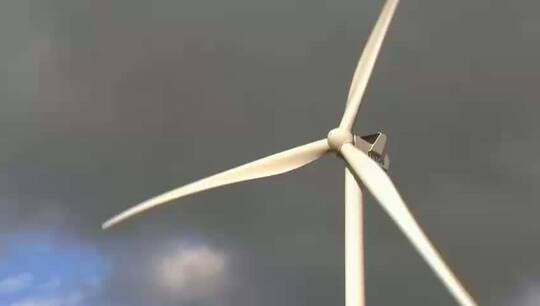
Life is not a computer simulation . . .
and the real world can often spring unwelcome surprises.
Vestas is committed to ensuring that
what works on paper will actually work for our customers on site.
Whether that site happens to be onshore or offshore.
And what’s the best way to imagine the worst . . .
and make it happen?
By replicating real life conditions under “Severe User Scenarios”.
By creating the different environments – and climates
in which our turbines are designed to operate.
Hilltops, extreme temperatures and marine environments
And that’s exactly what we do here at our Test Centre
. . . using predictive models to subject our designs
to the harshest tests that nature can impose.
We begin by identifying the types of failures
that can occur and the physics behind them
– the failure mechanisms and stressors.
Then, we design a specialized method of testing
that subjects to components to these forces
– amplifying them, sometimes until the point of failure.
These are known as Highly Accelerated Life Tests,
and they are carried out in our specialized rigs.
Technicians place sensors to measure the effects on components,
including gearbox, generator, yaw system,
and pitch system, lubrication system and accumulators.
The data from these tests is then extrapolated
to predict component lifetime in the field.
If we find that components don’t meet the specified requirements,
we change the design or improve the production processes
to remove the failure
When Vestas speaks about reliability
we are basing our communications on specifications,
and also on hard facts from real world tests.
And in the real world, that’s what really counts.
 Share
Share